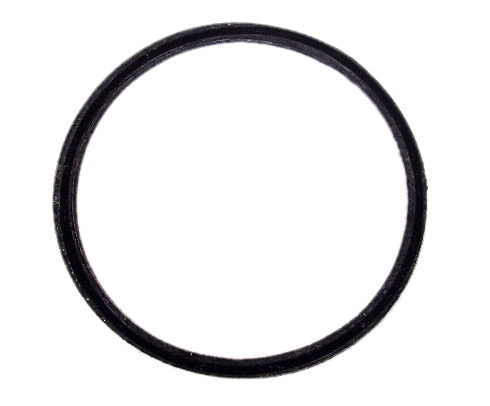
Your aircraft requires many fluids and gasses to fly, so it’s important to ensure all of your connections are as strong and leak-free as possible. Fortunately, fending off leaks is easy when you shop at SkyGeek. We carry a huge selection of aviation O-rings in common sizes to fit your bird. Our O-rings are made by some of the biggest name brands in the industry, like Military Standard, so you can shop with confidence.
When choosing an O-ring, size matters. You need to make sure the O-ring is big enough to seal the tube, hose or connection you’re using. It must also be flexible and strong enough to withstand contact with gasses and aviation fluids. Whether you need a large O-ring or a small O-ring, SkyGeek has you covered. Our O-rings are designed to meet or exceed U.S. Military Standards, AS and NAS standards. O-rings are priced low and most are sold individually, so you won't need to buy in bulk — unless you want to. Shop online for O-rings in a wide range of sizes and save on the aircraft seals you need to prevent gas and fluid leaks.
Q: What O-ring specifications are used in aircraft systems?
A: Aircraft O-rings are specified under AS568 dash numbers for most hydraulic and fuel system applications. MIL-SPEC O-rings include MIL-P-5516 for nitrile general-purpose packing and MIL-R-83248 for fluorosilicone. The applicable specification and dash number are identified in the component's illustrated parts catalog and maintenance manual.
Shop MIL-SPEC hardware at SkyGeek
Q: What materials are aviation O-rings made from?
A: Aviation O-rings are manufactured from nitrile (Buna-N) for general petroleum fluid compatibility, fluorocarbon (Viton) for phosphate ester hydraulic fluid, fluorosilicone for fuel system applications, and silicone for high-temperature static sealing. Material selection must match the fluid being sealed and the operating temperature range.
Q: Can O-rings be reused in aircraft maintenance?
A: In most cases, O-rings should not be reused after removal. Once compressed and exposed to heat and fluid immersion, the elastomer may not return to its original dimensions or provide a reliable seal. Many aircraft maintenance manuals specifically require O-ring replacement during disassembly.
Shop preformed packings and O-rings
Q: How do you identify the correct O-ring for an aircraft component?
A: Identify the correct O-ring using the component's illustrated parts catalog, which lists the applicable dash number and specification. O-ring size is defined by inside diameter and cross-section per the AS568 or MS standard. When sourcing replacements, confirm the material specification matches the fluid system requirements.
Q: What lubrication is used when installing aircraft O-rings?
A: O-rings are lightly lubricated during installation using a lubricant compatible with both the O-ring material and the system fluid. Petroleum-based lubricants must never be used on fluorocarbon O-rings in phosphate ester hydraulic systems.
Shop assembly lubricants
Q: What causes O-ring failure in aircraft hydraulic and fuel systems?
A: Common failure causes include incorrect material selection, installation damage from sharp edges or improper tools, thermal degradation, fluid incompatibility causing swelling or hardening, and extrusion at excessive system pressure without backup rings. Read our MIL-SPEC O-rings guide for more on selection and installation.
Read: MIL-SPEC O-Rings Guide